
UNESCO Biosphere Regions
Part of a world network of 750+

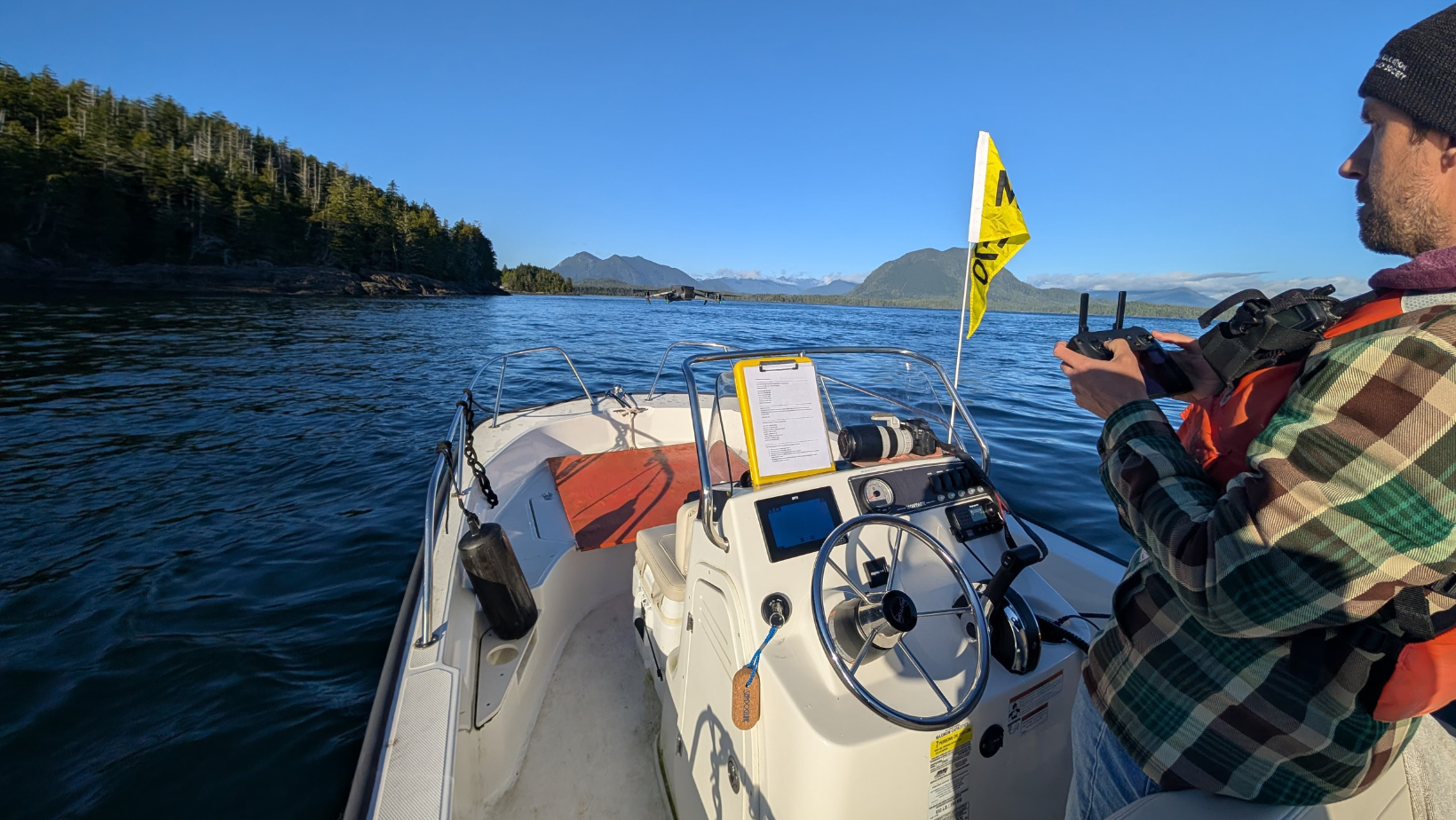 Photo credits: Whales of Clayoquot and Barkley
We deeply appreciate the efforts of the Research and Environment Advisory Committee, a group of dedicated local volunteers who carefully reviewed every application. To learn more about the projects below or to connect with a project leader, email colin@clayoquotbiosphere.org.
Special thanks to Tofino Resort & Marina for generously contributing to the Biosphere Research Award budget this year through the Clayoquot Sustainability Fund.
Modelling Nearshore Habitat Suitability for Forage Fish on the West Coast | Project Watershed Society
Pacific sand lance are small forage fish that play a critical role in coastal ecosystems, serving as a key food source for seabirds, salmon, whales, and more than 100 other predators. Along the west coast of Vancouver Island, their spawning and habitat areas remain largely unknown, with very limited data available.
This project uses environmental DNA (eDNA), tiny genetic traces left behind in the sand, to detect the presence of sand lance in intertidal and shallow subtidal habitats. By combining these findings with data on sediment type, shoreline features, and ocean conditions, the project will develop a predictive habitat map identifying where suitable sand lance habitat is likely to occur. This tool will support communities, First Nations, and decision-makers in protecting important nearshore areas and making more informed choices about shoreline development and marine planning.
The FOG* Project: Grey Whale Drone Photogrammetry | Marine Education and Research Society
This project uses drone-based aerial imaging to safely measure individual whales and assess their body condition. These measurements are processed and used to calculate a Body Area Index, a key indicator of health. Over a three-year period, the project will track multiple whales across seasons to better understand changes in body condition, year-to-year variation, growth rates, and pregnancy. It will also provide insights into how whales use different foraging habitats. By focusing on the health and behaviour of known individuals, the project aims to build a clearer picture of how the Pacific Coast Feeding Group grey whales are doing in the region.
Wildlife Monitoring in ƛaʔuukʷiʔatḥ haḥuułii | Nuu-chah-nulth Youth Warrior Family Society
This project monitors and maps wildlife movement and habitat use within ƛaʔuukʷiʔatḥ (Tla-o-qui-aht First Nation) territory by integrating community knowledge with spatial technology. Tribal Parks Guardians and community members provide observations on species activity and corridors to guide the placement of bush cameras. The ground-level data is then supplemented with drone surveys and LiDAR imagery to create 3D maps of forest structures and biodiversity hotspots. A key focus includes monitoring the Tranquil watershed to understand how industrial activity affects habitat integrity.
The goal is to provide ƛaʔuukʷiʔatḥ with empirical evidence to support Indigenous-led land-use decisions and strengthen the Nation’s capacity to protect and sustainably harvest key species. By involving local youth in technical training and field operations, they ensure that conservation skills and data ownership remain within the community, fostering long-term stewardship and informed management of the haḥuułii.
As both the local community foundation and the organization stewarding the Clayoquot Sound UNESCO Biosphere Region designation, the Clayoquot Biosphere Trust is proud to provide annual funding to local partners who are carrying out vital work that strengthens community well-being and supports the long-term health of ecosystems across the region.


