
UNESCO Biosphere Regions
Part of a world network of 750+

We deeply appreciate the efforts of the Research and Environment Advisory Committee, a group of dedicated local volunteers, for the time and care they put into reviewing each application. To learn more about the projects or connect with project leaders, email colin@clayoquotbiosphere.org.
Cuw̓it Monitoring in Haʔukmin Watershed | Ha'oom Fisheries Society
This project, led by Ha’oom Fisheries Society in partnership with ƛaʔuukʷiʔatḥ (Tla-o-qui-aht First Nation), aims to help restore salmon abundance by improving understanding of juvenile coho habitat use and early freshwater survival, which is a critical life stage. It builds on a successful 2025 field season carried out with Simon Fraser University and graduate student Hutton Noth. The project funding for last year stemmed from a successful application of the CBT Biosphere Research Award in 2024.
Fieldwork from July to September involves the non-lethal capture, sampling, and Passive Integrated Transponder tagging of juvenile cuw̓it (Coho salmon) at multiple locations throughout the watershed. Data collected will be used to identify important rearing habitats, estimate juvenile outmigration, and improve understanding of survival rates. The results will directly inform habitat restoration priorities, enhancement targets, and juvenile escapement.
Healthy Harbour: Community Monitoring & Stewardship | Ucluelet Aquarium Society
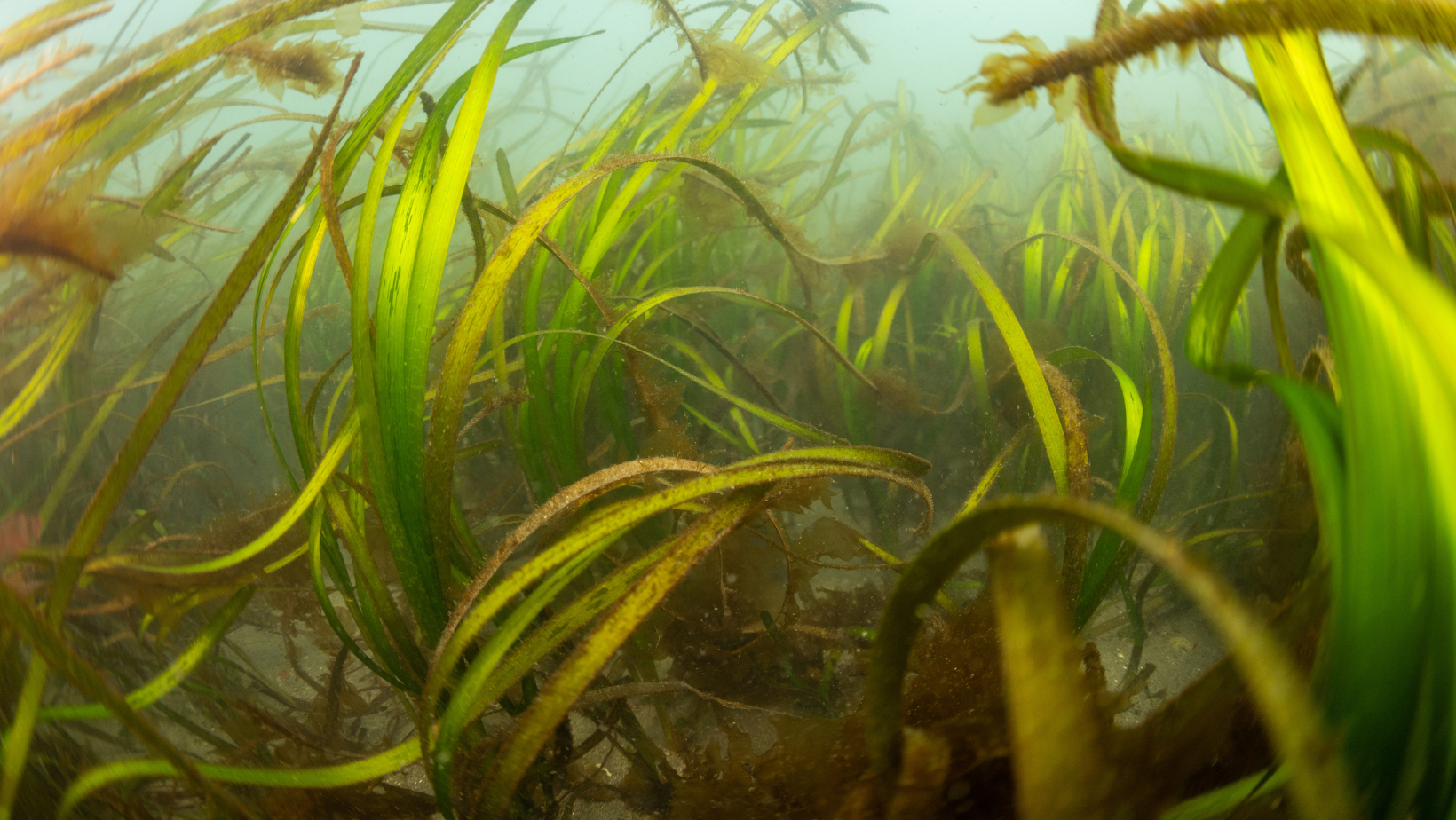
The Healthy Harbour Program at the Ucluelet Aquarium is a community-based marine monitoring and education initiative that focuses on improving ecological health and stewardship in the Ucluelet Harbour. The project expands monitoring of eelgrass beds and sea star populations while strengthening public education about plankton and marine ecosystems.
The program emphasizes youth and community engagement by providing opportunities for hands-on fieldwork and marine science learning. Public outreach is supported through a “Living Harbour” exhibit at the aquarium, which shares monitoring findings and highlights connections between the community and the harbour.
Preventing the Spread of Invasive Yellow Flag Iris | Association of Wetland Stewards for Clayoquot and Barkley Sounds
This project is helping prevent the spread of invasive Yellow Flag Iris into estuarine and freshwater ecosystems within the region. Yellow Flag Iris forms dense stands in wet areas, where it out-competes native plant species, reduces wildlife habitat and biodiversity, and alters hydrology. While it is already well established at several sites in Ucluelet, new and smaller infestations are emerging in other locations.
To address this issue, the project combines education, early intervention, and targeted removal efforts. Outreach activities are raising awareness about the impacts of Yellow Flag Iris and encouraging people not to plant it near coastal and freshwater habitats. Volunteers and project crews are removing flowers from mapped patches before they go to seed, helping limit further spread, while smaller infestations are being fully removed. Larger patches are being treated with benthic barrier mats to suppress growth over time.
Building on work completed in 2025, the team is continuing to remove weakened plants and dead rhizomes beneath the mats. Once patches are fully controlled, the mats are being relocated to additional sites, supporting ongoing containment and restoration efforts across the region.
Tofino Wah-nah-jus Hilth-hoo-is Mudflats Shorebird Film | Raincoast Education Society
For many years, the Raincoast Education Society has led and collaborated on research aimed at better understanding how shorebirds use habitat in and around Tofino. Their work highlights the importance of the Tofino Wah-nah-jus Hilth-hoo-is Mudflats, a Western Hemisphere Shorebird Reserve Network site, which is critically important for several species, particularly Western Sandpipers. This research has also shown that human disturbance can significantly affect shorebird behaviour by reducing the time they spend feeding and resting.
Leveraging the Raincoast Education Society's involvement with the long-standing Tofino Shorebird Festival, they are filming and presenting a short mini-documentary highlighting the amazing journeys these birds take. The film will explain why Tofino is such an important stopover site along their migratory route, and how we can all act individually and collectively to minimize the impacts of disturbance while still enjoying this incredible spectacle of nature.
By combining science, storytelling, and community engagement, the project aims to raise awareness, inspire responsible wildlife viewing, and encourage stewardship to help protect shorebirds and their habitats.
As both the local community foundation and the organization stewarding the Clayoquot Sound UNESCO Biosphere Region designation, the Clayoquot Biosphere Trust is proud to provide annual funding to local partners who are carrying out vital work that strengthens community well-being and supports the long-term health of ecosystems across the region.


